Architectures & Theory
Weight sharing, recurrent depth, expressivity, fixed-point convergence, and algorithmic generalization.
THE FIRST WORKSHOP · PROPOSED FOR ICLR 2027
Advancing adaptive, efficient, and scalable intelligence
Recursive computation · Looped architectures · Iterative learning
A new forum for recursive intelligence. The First Workshop on Recursive and Looped Learning is proposed for ICLR 2027, bringing together research on architectures, algorithms, theory, systems, and applications.
Initial invited speakers. Diyi Yang, Huan Sun, and Ruijie Zhu are listed as confirmed in the proposal. Talk titles and the full lineup will be announced.
Proposed submission deadline: February 1, 2027. The OpenReview submission link will be added when available. Please see the proposed submission guidelines.
Can intelligent systems reason more deeply by repeatedly refining internal representations?
Modern foundation models have made remarkable progress in language, reasoning, multimodal learning, and autonomous decision-making. Yet most Transformer architectures still rely on fixed-depth computation. Increasing model size, generating longer reasoning traces, or spending more test-time compute can improve performance, while adding substantial memory demands and inference latency.
Recursive and looped learning offers another path. By repeatedly applying shared computational modules, models can refine hidden representations, reuse parameters, and adapt their computational depth to a task. From Adaptive Computation Time and Universal Transformers to Deep Equilibrium Models and looped language models, this line of work asks how effective depth can grow without a corresponding increase in parameter count.
This workshop aims to connect theoretical foundations with practical advances in training, inference, scalability, interpretability, and safety. We welcome researchers and practitioners from machine learning, natural language processing, computer vision, reinforcement learning, systems, and AI safety.
Weight sharing, recurrent depth, expressivity, fixed-point convergence, and algorithmic generalization.
Learned halting and dynamic iteration budgets that balance reasoning quality with computational cost.
Stable recursive pretraining, fine-tuning, reinforcement learning, distillation, and recurrent-depth generalization.
Iterative hidden-state refinement, implicit reasoning, and interpretable internal reasoning trajectories.
Dynamic-depth serving, memory reuse, scalable execution, and efficient training and inference infrastructure.
Reliable recursion for mathematical reasoning, code, multimodal understanding, robotics, and autonomous agents.
We invite theoretical, algorithmic, empirical, and systems-oriented contributions that advance recursive and looped learning. We welcome mature research as well as preliminary ideas, negative results, position pieces, and work in progress.
Topics of interest include, but are not limited to:
Main text in the ICLR 2027 format, excluding references and appendices. Accepted papers may use one additional page in the camera-ready version, up to 10 pages.
Short contributions covering preliminary ideas, negative results, position pieces, or ongoing work. References are excluded. These papers will primarily be presented as posters.
The workshop-specific OpenReview link is not yet available. The guidelines and dates on this page reflect the proposal and may be updated after confirmation.
The proposed timeline is listed below. The exact workshop day, venue, and deadline time zone will be confirmed.
| Submission Deadline | Proposed |
|---|---|
| Notification of Acceptance | Proposed |
| Camera-ready Deadline | To be announced |
| Workshop Day | April 29–30, 2027Specific day to be confirmed |
| Format | Hybrid · In-person and online participation |
| Venue & Online Access | To be announced |
The proposed full-day program combines invited perspectives, contributed research, and open discussion. Individual time slots will be posted approximately two weeks before the event.
Perspectives on recursive architectures, latent reasoning, adaptive computation, and efficient learning systems.
Selected accepted papers presented as oral talks, with time for questions and discussion.
Two opportunities to explore accepted work, exchange ideas, and build connections across research communities.
A discussion of open challenges in reasoning, scalability, reliability, and the future of recursive intelligence.
The detailed schedule, talk titles, live-stream access, and recordings will be added when available.
The following speakers are listed as confirmed in the workshop proposal. Additional speakers and talk titles will be announced.

Stanford University
Talk title to be announced

The Ohio State University
Talk title to be announced

ByteDance Seed
Talk title to be announced

Northwestern University
EmailAI safety, efficient reasoning, and foundation models across text, vision, speech, and genomic modalities.
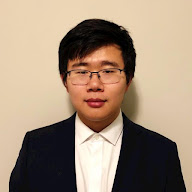
Northwestern University
EmailVideo understanding, multimodal reasoning, AI for science, and the reliability and interpretability of model reasoning.

Illinois Institute of Technology
EmailSecurity and efficiency of generative AI, attention mechanisms, and test-time scaling in reasoning models.

University of Washington
EmailRetrieval-augmented language models, data usage, and mixture-of-experts methods for distributed training.

Michigan State University
EmailGraph reasoning and mechanistic interpretability of large language models, including structural representations in Transformers.

The Ohio State University
EmailLearning and generalization in foundation models, reasoning, interpretability, compositional generalization, and recurrent architectures.

University of Wisconsin–Madison
EmailEfficient LLM inference, long-context models, and memory and throughput optimization.

Caltech / TikTok
EmailLong-context language models, memory and throughput optimization, and efficient reasoning.
All organizers will also serve on the Program Committee. Additional members listed as confirmed in the proposal include:
We aim to support Ph.D. students, postdoctoral scholars, and researchers from underrepresented groups through contributed talks, posters, and discussion-oriented programming. Any sponsorship funds are intended to prioritize attendance support for junior researchers.
The proposed hybrid format combines live participation with access to recorded content across time zones. Double-blind reviewing, conflict-of-interest management, and reviewer mentorship will support a fair and inclusive research exchange.
Questions about submissions or participation?
Contact the workshop organizers.